
Fukura-an
風蔵庵
A safe and natural space for youth facing school refusal and social withdrawal
Background: School Refusal in Japan and Hikikomori
Recent estimates suggest that approximately 1.5 million people in Japan are living in a state of social withdrawal, known as hikikomori (引きこもり). This phenomenon affects people across all age groups.
Particularly concerning is the situation of children and adolescents. According to Japan’s Ministry of Education, approximately 354,000 students are classified as futōkō (不登校), meaning they do not attend school regularly.
The reasons are complex and include school-related anxiety, bullying, social overwhelm, and psychological distress such as depression and anxiety.
In recent years, the situation has become increasingly serious. Japan has recorded a record number of suicides among school-aged children, and suicide remains the leading cause of death among young people.
Fukura-an responds to this context by offering a preventive, nature-based environment where young people can reconnect, rebuild trust, and regain a sense of belonging.
The FUKURA-AN Project: A Safe Space to Breathe Again
FUKURA-AN is a project by the Three Cranes Association (Switzerland), created for children and adolescents facing school refusal and social withdrawal.
The project offers nature-based retreats over one or several days, providing a safe and supportive environment where participants can reconnect with themselves and others, away from the pressures of school and daily life.
Time is spent simply and collectively: in the house, in nature, and by the sea. Activities include cooking and sharing meals, spending time outdoors, and allowing space for rest, play, and spontaneous interaction.
Many participants are naturally drawn to the nearby coastline, where they explore, observe, and engage with the surrounding environment.
The focus is not on performance or structured programming, but on creating conditions in which trust, curiosity, and connection can develop at an individual pace.
The Location
Fukura-an is located in a small fishing village south of Tokyo, on a hill overlooking the Pacific Ocean.
The house, with its 300-year-old thatched roof, is surrounded by ancient trees, shrines, and an extensive garden. The sea is within walking distance, offering direct access to the coastline.
The natural setting plays a central role in the experience, providing a sense of openness, calm, and connection that supports the retreat process.
Development of the Retreat
Since 2025, three Fukura-an retreats have been realised.
The initial gatherings in spring and autumn 2025 were held as one-day retreats. In April 2026, the program was extended to include an overnight stay across two days.
Across all editions, a consistent structure has emerged, centred on shared meals, time in nature, and collective experience within the house and its surroundings.
Cooking together remains a key element. Meals are prepared using seasonal and locally sourced ingredients, including vegetables, fish, meat, and eggs from the surrounding region. Participants are actively involved in the preparation, creating a shared sense of engagement.
Time outdoors plays an equally important role. The nearby coastline offers a dynamic environment where children and adolescents spend extended periods exploring, observing, and interacting with nature.
The program allows for flexibility and openness, enabling spontaneous activities, creative play, and moments of rest to emerge naturally.
A Gift to Take Home
At the end of each retreat, participants receive a small, carefully prepared set of materials.
This includes a personal letter and selected ingredients, inviting them to recreate part of the shared experience at home, such as preparing a recipe together with family or friends.
The intention is to extend the experience beyond the retreat itself and to support continuity in everyday life.
Observations
Over the course of the three gatherings, a clear development has been observed.
Many participants return, and familiarity with the place and the group continues to grow. With each retreat, the time needed for participants to open up becomes shorter, and interaction within the group becomes more natural.
Children who have attended multiple times show increased initiative and engage more easily with others, including new participants.
A strong affinity for the natural environment is evident. Participants consistently spend extended time outdoors, particularly along the coastline and in the garden, where spontaneous play, exploration, and collaborative activities emerge.
The need for structured guidance has decreased over time. The presence of attentive adults remains important, while the group increasingly finds its own rhythm.
Returning participants demonstrate a clear sense of orientation and belonging, moving naturally into the space and encouraging others to follow.
The extension to a two-day format further deepened this dynamic, allowing for a stronger sense of continuity, connection, and shared experience.
Feedback from participants and families also gives insight into how the experience continues beyond the retreat.
One participant shared:
“I realised that being with others is not as difficult as I thought. Even after spending the whole day together, I did not feel tired.”
Another child wrote:
“This time, I wanted to talk more.”
A parent wrote:
“She smiled in a way I hadn’t seen for months. She came home proud, showing me how to make the mousse. Thank you for making us feel not alone.”
Looking ahead
Building on the experience of the past three gatherings, the Fukura-an program will continue with two retreats per year.
In addition, possibilities are being explored to open the space more regularly for smaller group visits or accompanied stays, allowing for longer-term engagement and continuity.
SUPPORT THIS PROJECT
To continue and expand the Fukura-an Project, we rely on financial support.
Every contribution helps to maintain and develop a safe space for children and adolescents in need.
Donation details:
Three Cranes Association
Ankerstrasse 122
8004 Zurich, Switzerland
Bank: St. Galler Kantonalbank, 8021 Zurich
IBAN: CH85 0078 1626 8687 2200 0
Learn more
If you would like to learn more or attend one of our information events in Zurich, please contact us:
info@threecranesassociation.com


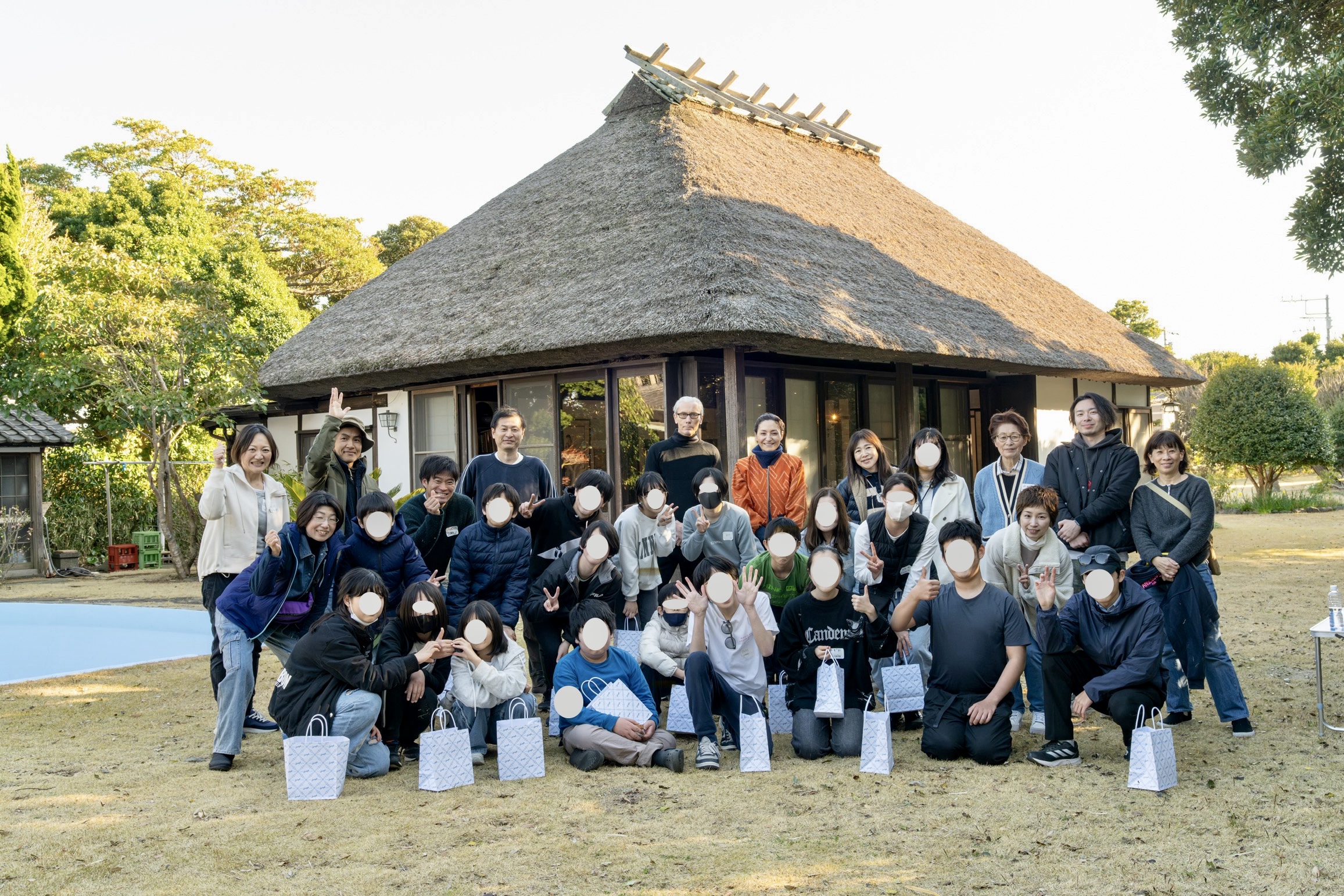
Photo Credits: LAKI STUDIO